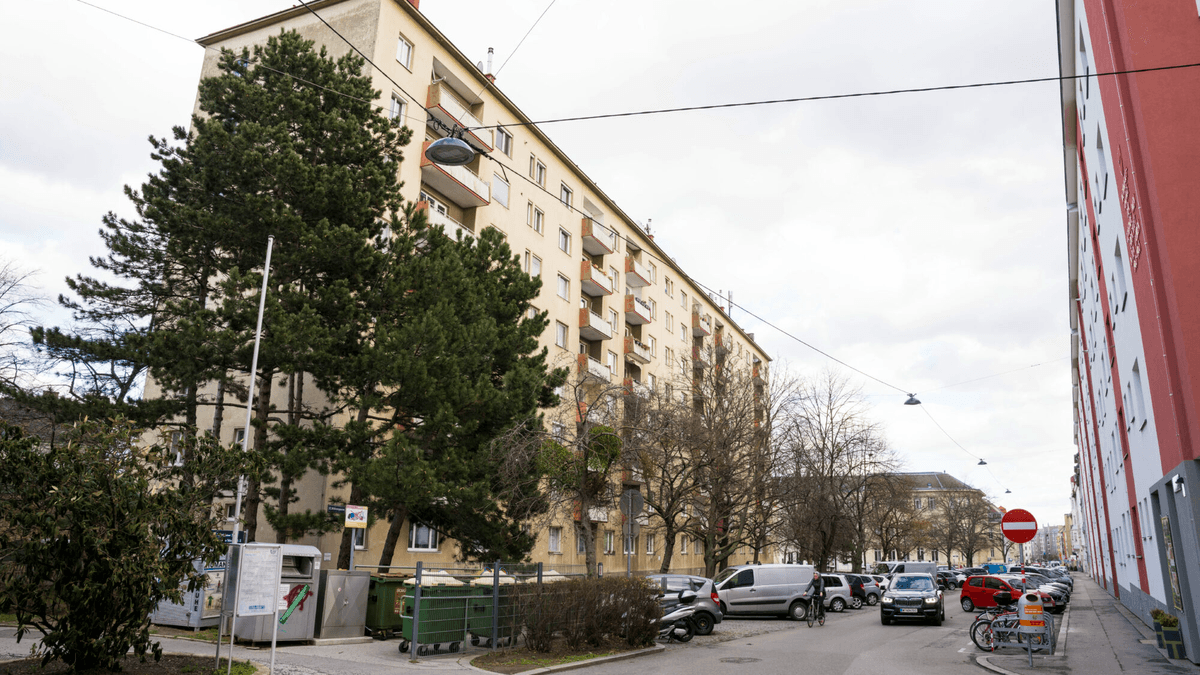
Social Housing Drorygasse
Back
Location number: 1030043
Gemeindebau
Innenhof
Wohnhausanlage
1920er
Innen- & Außenbereich
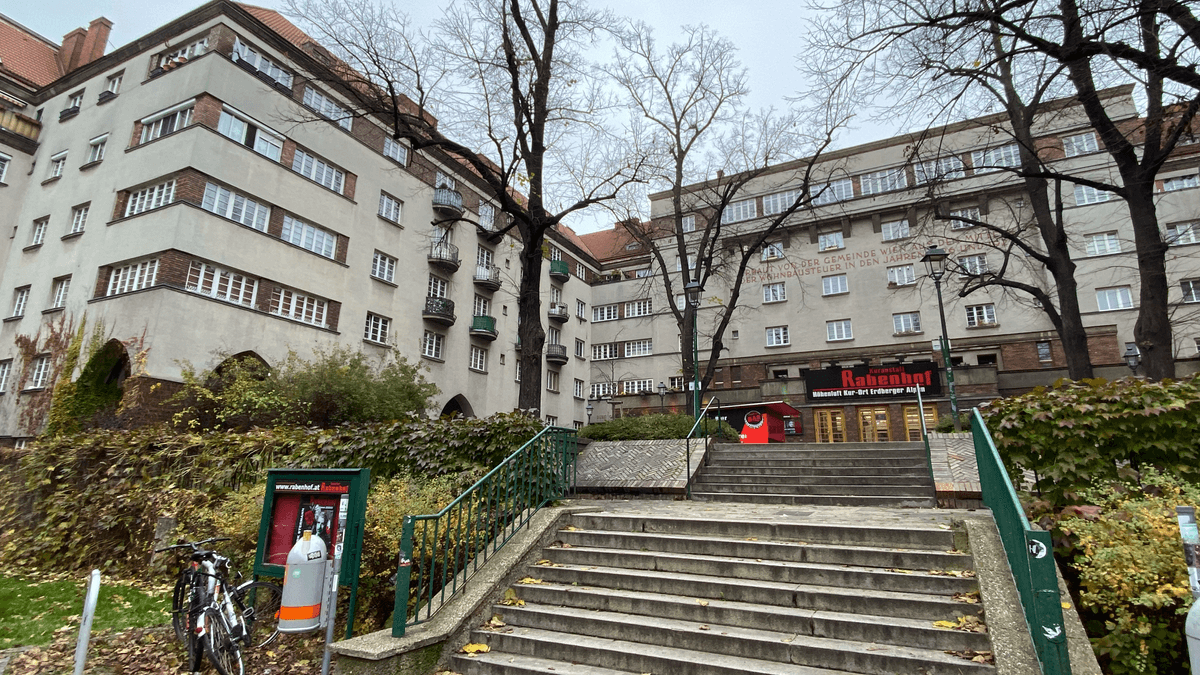
The housing complex was built on the former grounds of the “Wällische Gärten,” which served as an important source of provisions for Vienna’s population until the 19th century. The land belonged to Oria della Scala from Verona, who donated the gardens to the Augustinian Order in 1445. In memory of the donor from “Welschland” (Italy), the name “Wällische Gärten” remained in use until the area was developed in the mid-19th century. The residential complex extends from Göllnergasse via Drorygasse to Dietrichgasse and is characterized by a recessed central block crowned with three pointed gables and a prominent entrance passage. Projecting wall sections, bay axes, tower-like elevated elements, triangular gables, and pointed window pediments structure the façade into dynamically staggered sections. A barrel-vaulted passage leads into a simple inner courtyard with arcades on the ground floor, while tower-like projecting staircases—partly extended with elevator additions—complete the overall appearance. The façades, richly decorated with relief panels and window pediments, lend the monumental structure a soft, romanticizing character. A striking detail is the corner pier with a capital at the corner of Dietrichgasse, which, like the arcades and barrel vaulting, recalls church architecture. The two-tone design, sharp triangular gables, and pointed bay axes emphasize the layered, dynamic façade composition in the style of 1920s Expressionism. Several notable figures lived temporarily at this address: resistance fighters Roman Felleis (1903–1944) and Franz Schuster (1904–1943) were persecuted for their political beliefs and died in Buchenwald concentration camp; municipal housing complexes in Hagenmüllergasse are named after them. The later Vienna city councillor Maria Jacobi (1910–1976) also lived here, as did the painter Otto Rudolf Schatz (1900–1961), who was banned from practicing his profession in 1938, emigrated to Prague, and returned to Austria after the Second World War.