Social Housing Fischerstiege
Back
Location number: 1010060
Fußgängerzone
Gemeindebau
Innenhof
Lift
Pflastersteinstraße
Stiege
Stiegenhaus
Wohnhausanlage
Wohnsiedlung
1950er
Innen- & Außenbereich
Lift
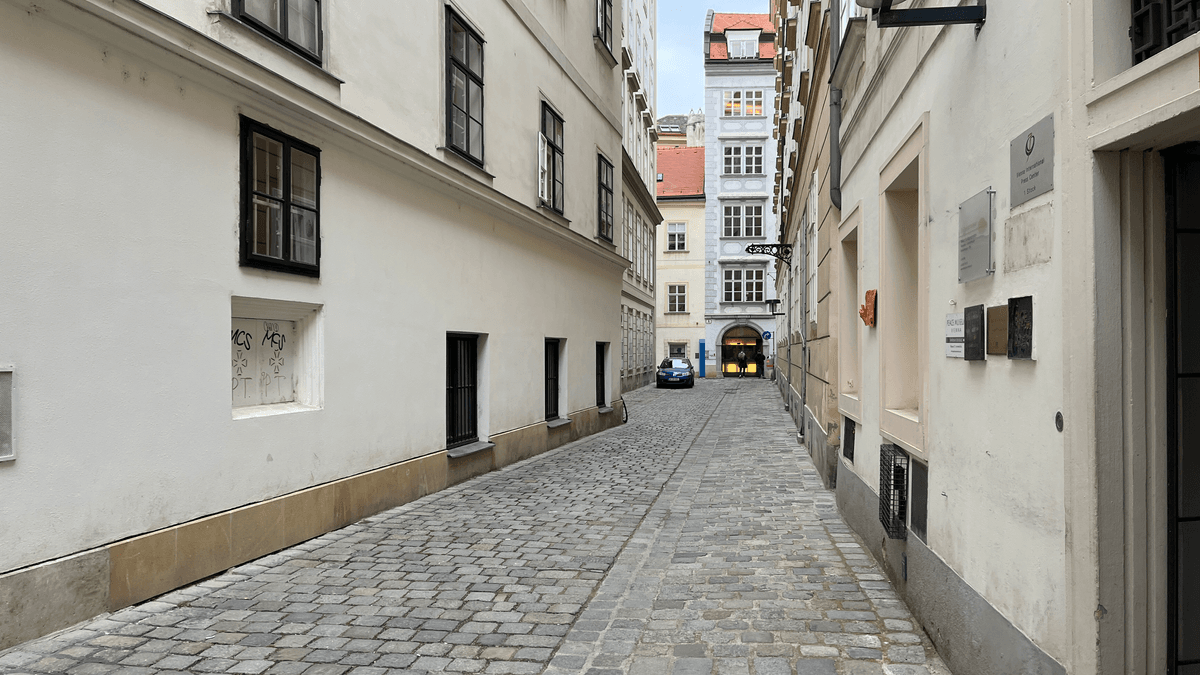
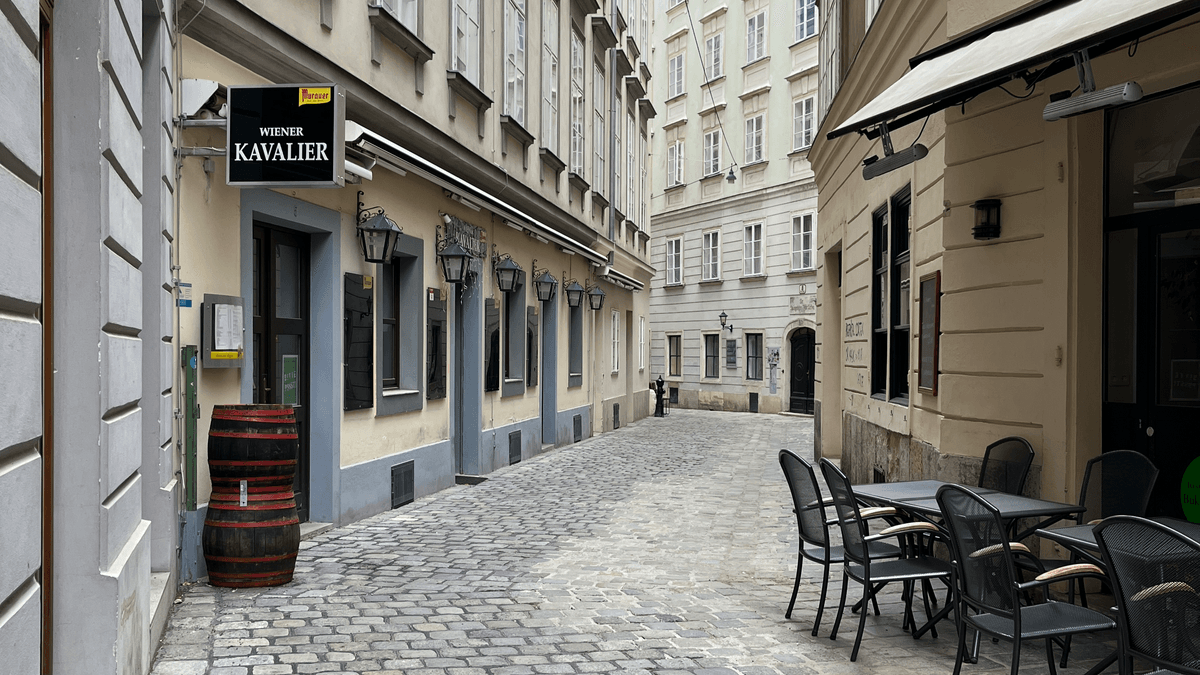
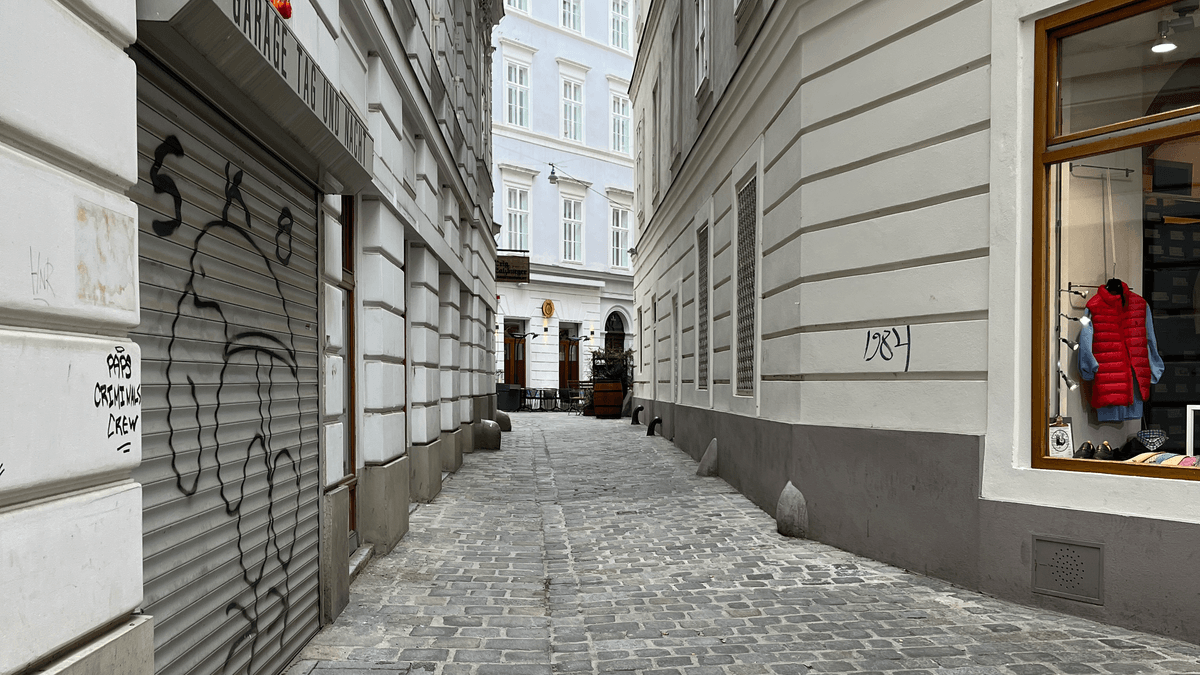
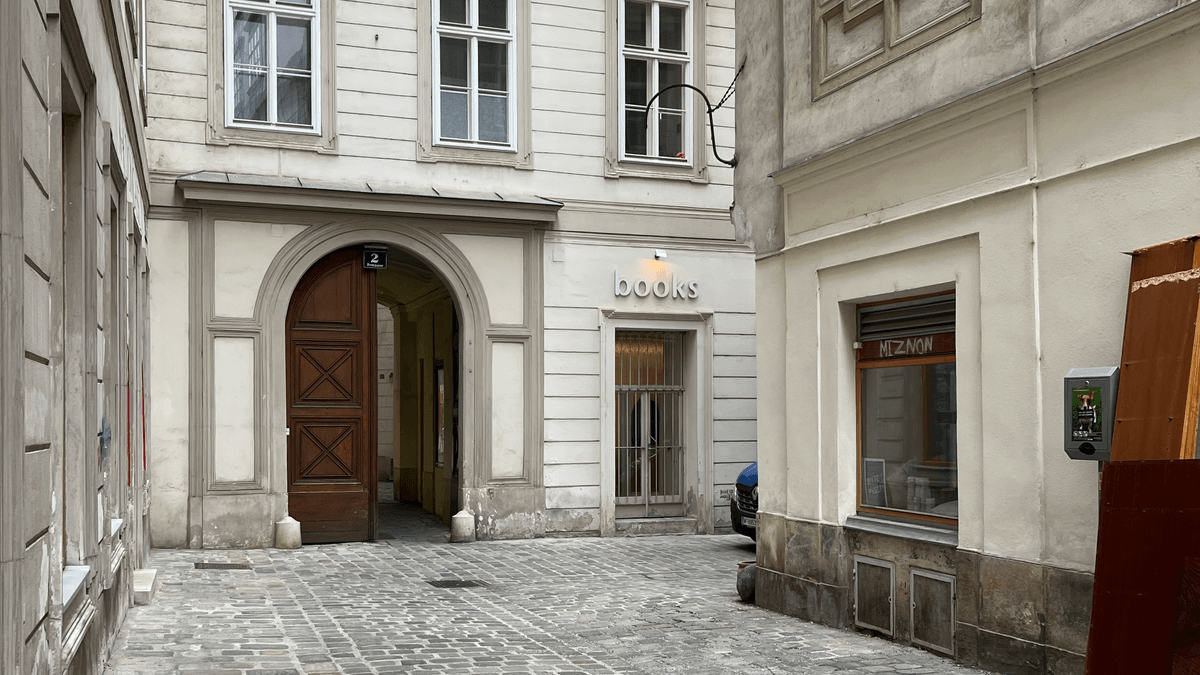
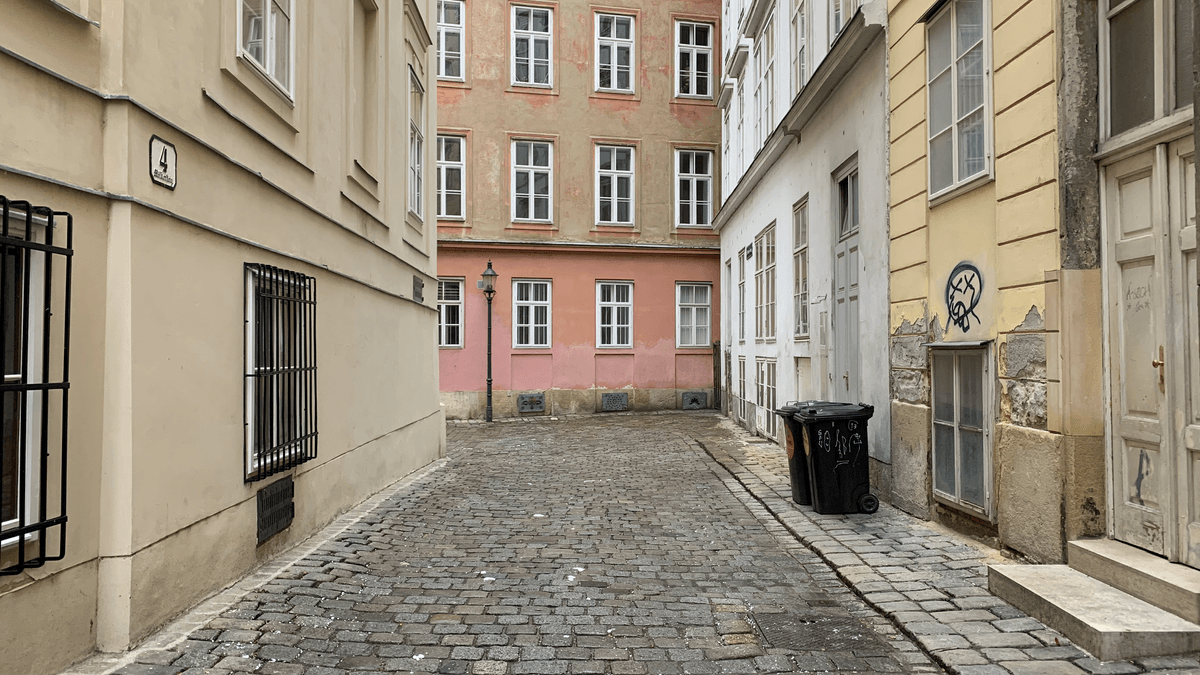
After severe wartime destruction in the so-called Textile Quarter, an urban planning competition was launched for its redevelopment. Although the most architecturally appealing designs were submitted by Otto Nadel, Alfred Kratochwil, and the duo Boltenstern-Wachberger, the project by Otto Niedermoser and Hans Petermair was ultimately realized due to its convincing urban design concept. Approved by the municipal council in 1951, the overall project included 148 apartments, retail and office spaces, and—unusually for the postwar period—the conversion of the attic into artists’ studios. While most municipal housing projects in the inner city after the war merely filled bombed-out gaps, the Fischerstiege complex represents a larger urban development that respects both the historic old-town layout and the modern concept of residential courtyards. Its simply plastered perforated façade with subtly framed windows and adjusted cornice and eaves heights blends harmoniously into the surroundings, while the sloping street level creates a horizontally stepped façade structure. The vertical division into a commercial ground floor, mezzanine level, and four- to five-story main section is crowned by a steep roof with dormer windows in keeping with the architectural character of the district. Fischerstiege was first documented in 1373; until the late 18th century, the Fishermen’s Gate of the Babenberg city wall stood there and was removed during the reign of Emperor Joseph II. A commemorative plaque on House No. 3 depicted the staircase and bore an inscription recalling this historic connection. The street name derives from the staircase that once linked the city via bridge and gate to the fishermen along the Danube riverbank, today’s Danube Canal.